
Mosby’s Rangers
About the history
You ride with Confederate partisans in a war fought over slavery. Here is how we handle that, and why we think the story is worth telling.
What the war was about
The Confederacy was created to protect slavery. The states that seceded said so at the time, in their own declarations. We say it plainly, because a game that puts you on that side has to.
John Singleton Mosby, whose battalion you ride with, said it too. Forty years after the war, on 4 June 1907, he wrote to Sam Chapman, who had been one of his officers:
If it was right to own slaves as property it was right to fight for it. The South went to war on account of slavery. John S. Mosby to Sam Chapman, Washington, D.C., 4 June 1907. Gilder Lehrman Collection, GLC03921.21.
He was answering reunion speeches that played down slavery’s part in the war, and in the same letter he pointed to South Carolina’s own declaration that it seceded because slavery would not be secure under Lincoln. In 1894 he had put it more bluntly: he “never heard of any other cause of quarrel than slavery.”
Mosby was not a reformer. In the same letter he wrote that he thought “as badly of slavery as Horace Greeley did”, and in the next breath that he was “not ashamed that my family were slaveholders”, nor “of having fought on the side of slavery”. He himself kept an enslaved man through the war. He was candid about the cause, not sorry for it, and he refused the comfortable story that the war had been about something else.
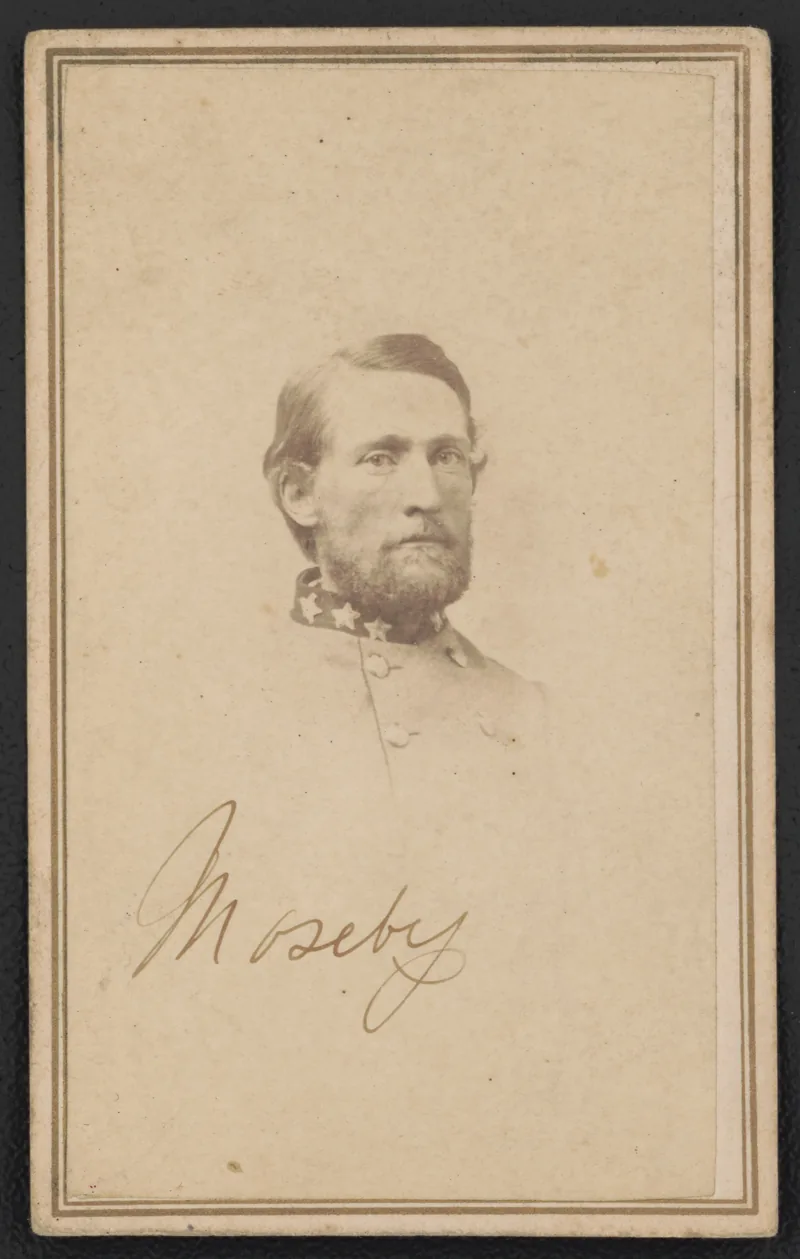
Mosby after the war
After the surrender Mosby did something few of his comrades forgave. He became a friend and supporter of Ulysses S. Grant, the general who had beaten the Confederacy, and backed his re-election in 1872, campaigning for him in Virginia. By 1876 he had joined the Republican Party. Many white Southerners called him a traitor for it.
Grant’s successor appointed him United States consul in Hong Kong, where he served from 1878 to 1885. He later worked for the General Land Office and then the Department of Justice, and he died in Washington in 1916. The man is more complicated than the cause he fought for, and that is part of the story.
Why a game about irregular war
Most games about the Civil War are about lines of infantry on open fields. This one is about the war in between. Mosby’s 43rd Battalion was raised under the Confederacy’s Partisan Ranger Act of 1862. His men lived in farmhouses across Loudoun and Fauquier counties, rode out to strike Union camps, wagon trains and railroads, and scattered back among the civilians before a pursuit could form. A few hundred men tied down thousands of Union troops.
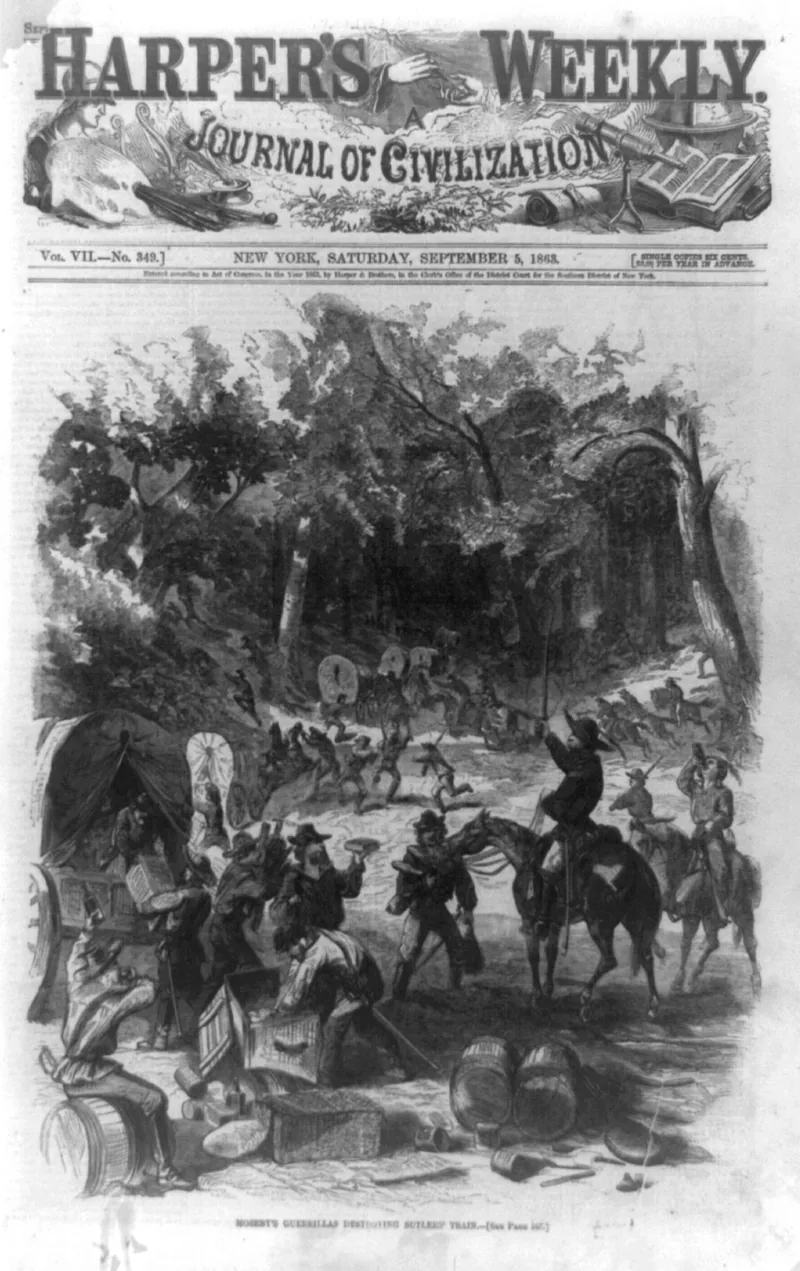
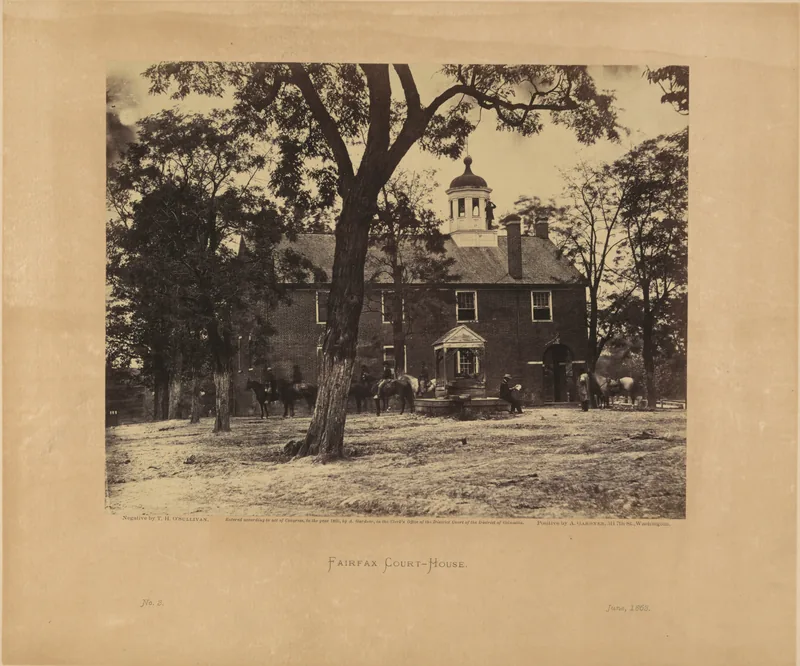
That kind of war is fought among families and farms, and it fell on them hard. Captured Rangers were executed, and Mosby executed Union prisoners in reprisal. Union cavalry burned barns and crops across the Loudoun Valley to strip the country that fed the partisans. The game does not look away from that: atrocity is a choice with consequences, not set dressing, and the campaign ends in surrender and disbandment, not victory.
Enslaved Virginians
The country Mosby’s men rode through was slave country, and many of the people who lived there were enslaved. In our game they appear as people with stakes of their own in this war, never as scenery. Their freedom depended on its outcome, and they were not waiting quietly to learn what it would be.
No Lost Cause
After the war, defeated Confederates and their heirs built a story now called the Lost Cause: that the South fought for states’ rights rather than slavery, that slavery was benign, and that defeat was noble. It is false. We don’t use its language or its imagery:
- no Confederate battle flag in anything we publish (in the game, flags appear only where history puts them);
- no “noble cause”, and no hero worship of the “Gray Ghost”;
- no silence about what the Confederacy was for.
The same goes for what we leave standing in our own communities, once we have them.
How we grade the evidence
Every statement we make about a place or an event carries a grade:
- Documented: a source from the period, or a participant’s own account, says so.
- Surveyed: surviving buildings, later maps or modern survey data show it.
- Typical: it was usual for that place and time, though nothing says so for this exact spot.
- Invented: we made it up for the game, and we say so.
Herndon Station, the first place we rebuilt, rests on 223 graded claims. Mosby’s own account of the storekeeper drawing molasses when the Rangers arrived is documented. The site of the sawmill comes from an 1878 map, so it is surveyed. The mill’s inside, its stair and its stacked boards, is typical of a steam sawmill of the 1850s, and its exact layout is invented. How we work explains how the grades are kept.
Who checks our work
This page is a draft. Before the game is announced, a historian and a sensitivity reader will read it, along with the store page and the first trailer, and they will be credited for their work. Until then, the banner at the top stays.
If you know this history and see something we have wrong, please tell us: hello@irregularformations.com.
Sources
- John S. Mosby to Sam Chapman, Washington, D.C., 4 June 1907. The Gilder Lehrman Institute of American History, Gilder Lehrman Collection, GLC03921.21.
- Ruth Ann Coski, “John Singleton Mosby (1833–1916)”, Encyclopedia Virginia, Virginia Humanities. For the 1894 letter, his wartime slaveholding, the Grant endorsement, his joining the Republican Party in 1876, and his later posts.
- National Park Service, “John Singleton Mosby”. For his part in Grant’s 1872 campaign and the charge of treason.