Herndon Station, noon, 17 March 1863

A wooden depot beside a bare railroad bed. An old steam sawmill on the south side of the road, and a handful of houses. Bright sun on wet snow over mud. A picket of the 1st Vermont Cavalry is posted at the mill with its horses tied to a fence, and out on the Dranesville road a lone vidette is reading a newspaper. Down that road, about forty of John S. Mosby’s men are coming.

No photograph of the village survives from that time. So we rebuilt it from the record: who held each lot, from the deeds of the 1850s; where the mill stood, from an 1878 atlas plate; the lie of the ground, from modern lidar survey with the creek and the rail grade cut back in; and the day itself, from the letters, memoirs, official reports and newspapers of the period. The result is 223 statements about the place, each with its source and an evidence grade, and every invention declared.

Herndon Station is the first place we rebuilt. Every place in the game is built the same way.
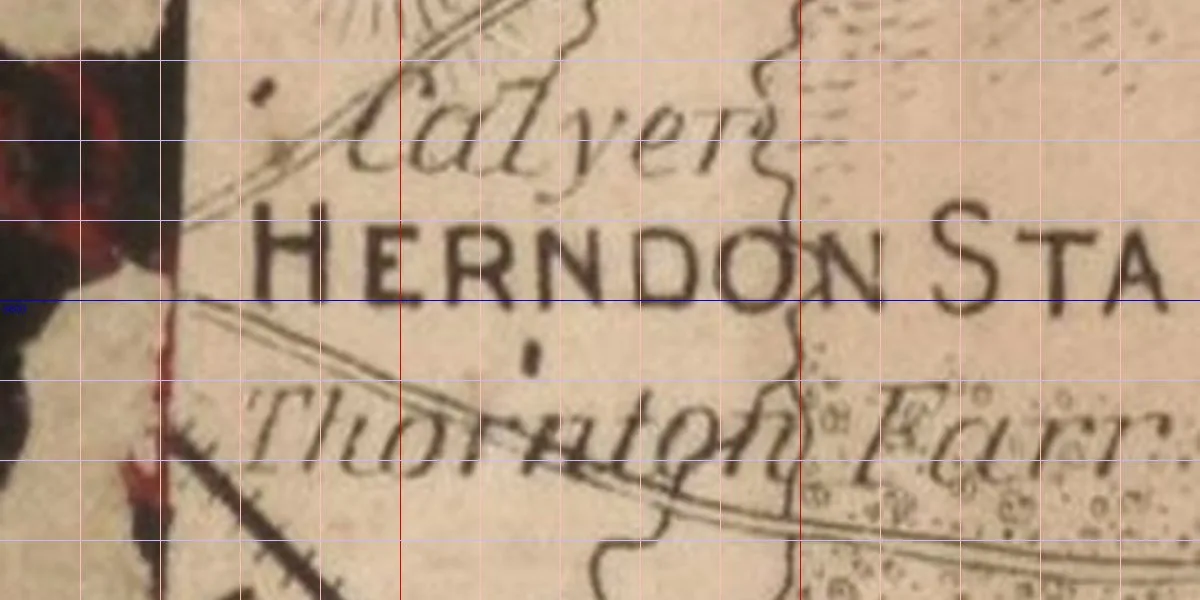
Detail of an engraved 1862 map: the words HERNDON STA in capitals, the name Calyer above, Thornton Farm below, a railroad line with cross-ticks, a road and a winding creek.
Herndon Station on McDowell’s map of north-eastern Virginia, compiled at Union headquarters in Arlington on 1 January 1862, fourteen months before the raid. The grid lines were drawn over the scan by our research pipeline to measure positions. Library of Congress, Geography and Map Division (LOC 91685689), via Wikimedia Commons. Public domain.
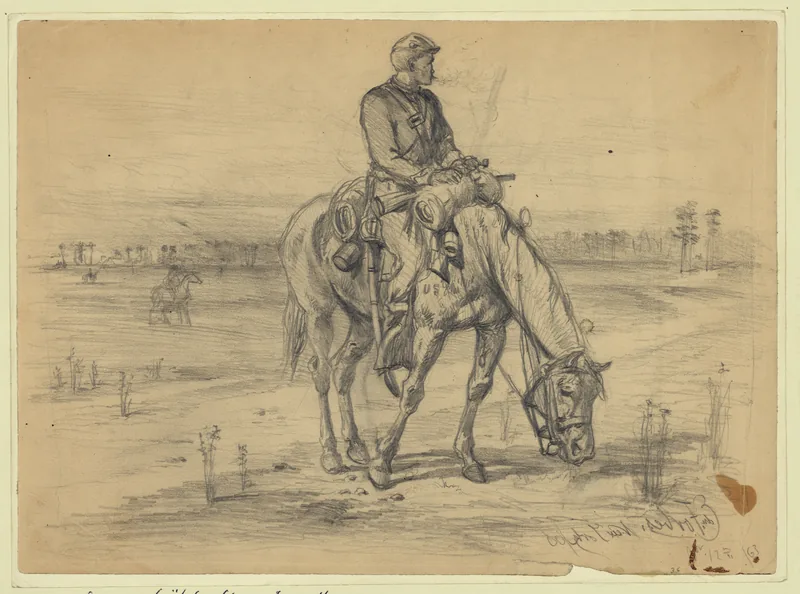
Pencil sketch of a Union cavalryman smoking a pipe on a grazing horse in an open, stump-dotted field, with another rider far behind.
A cavalry vidette, the lone mounted sentry a picket put out ahead of its post, drawn by Edwin Forbes in 1863. Edwin Forbes. Library of Congress, LCCN 2004661463. No known restrictions on publication.

Herndon, in development

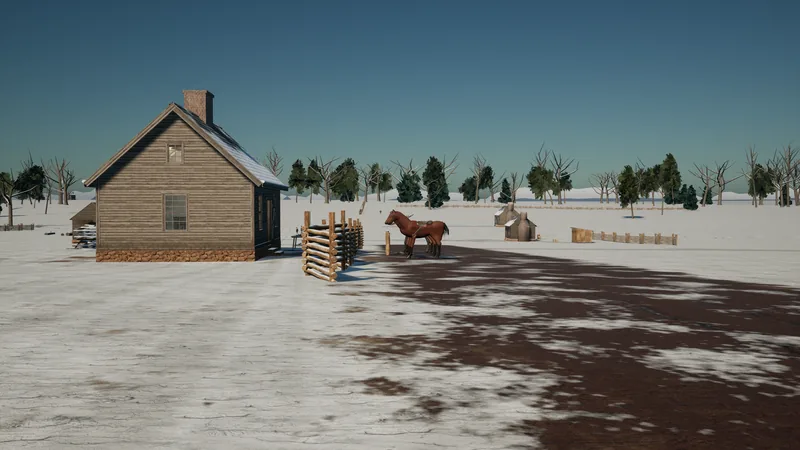
Here is the place as it stands in the engine today, rebuilt from that record. These are frames captured from the game, not artwork, and they will change as the work goes on.
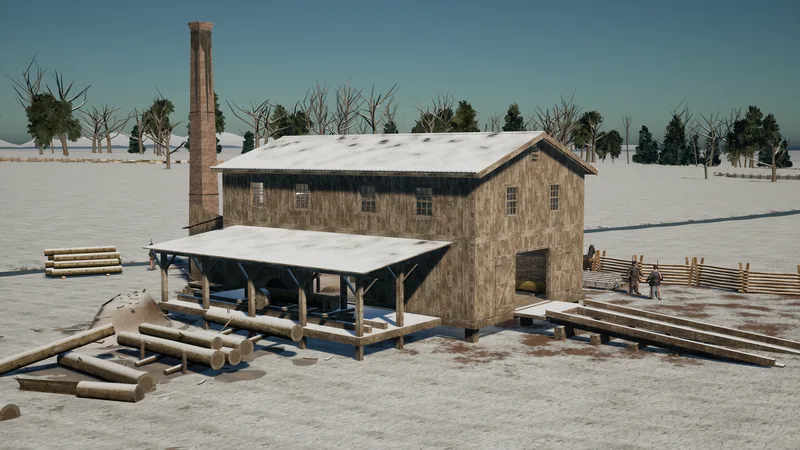
High view of a weathered board sawmill with an open-sided saw shed, a brick chimney, logs and timber skids in the snow, bare trees and pines behind.
The sawmill at Herndon Station, where the Vermont picket was posted, at noon on a snowy March day. The two small figures by the fence are men of the picket. In-engine capture from Mosby’s Rangers, in development.
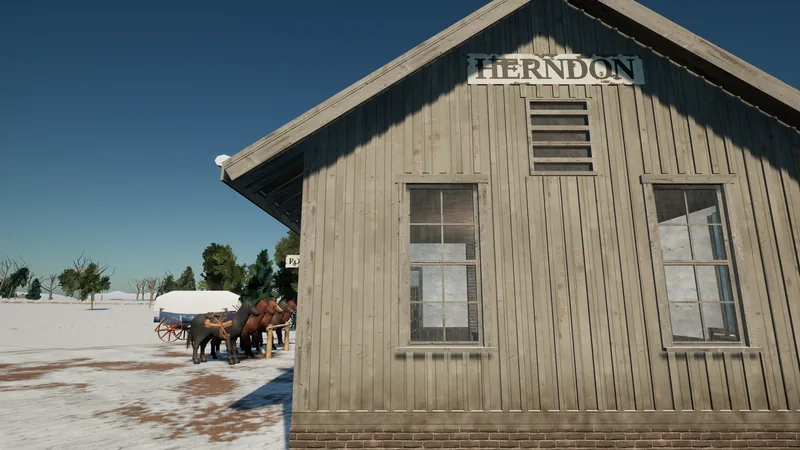
The board-and-batten gable end of a small railway depot with a weathered "HERNDON" sign, two tall windows and a louvre; saddled horses tied at a rail and a covered wagon in the snow to the left.
The depot’s east gable, with horses at the rail. No source dates a name board to 1863, so the board is a declared invention. In-engine capture from Mosby’s Rangers, in development.
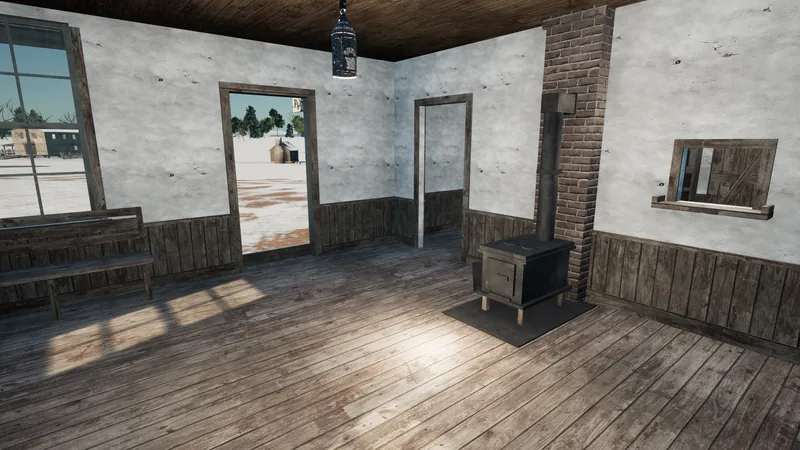
An empty waiting room with whitewashed walls over board wainscot, a bench under a window, a black box stove against a brick flue and a small ticket window; snow outside the open door.
Inside the depot: the waiting room, with its bench, box stove and ticket window. In-engine capture from Mosby’s Rangers, in development.
A clapboard house with a brick chimney beside a muddy road through snow, a short rail fence and two saddled horses, bare trees and pines along the horizon.
The road through Herndon Station: mud, snow and bare March trees. In-engine capture from Mosby’s Rangers, in development.
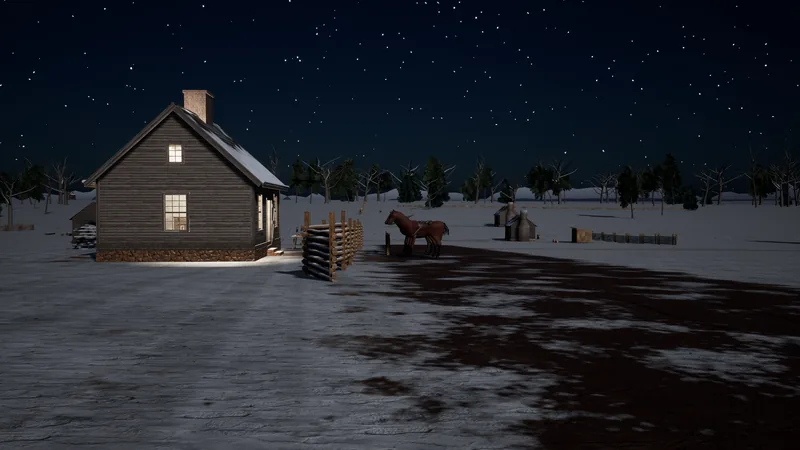
The same house at night under a starry sky, warm light in two windows, the snow pale in the moonlight and the horses dark by the fence.
The same road by moonlight. The raid happened at noon; this is a test of the night lighting the game’s other raids need. In-engine capture from Mosby’s Rangers, in development.

Who you are

You play a lieutenant you create, one of the partisan rangers of Mosby’s 43rd Battalion, Virginia Cavalry, rising from recruit to command a detachment of ten to fifteen men. Mosby gives broad orders. How you carry them out, who rides with you and what kind of man leads them are up to you.
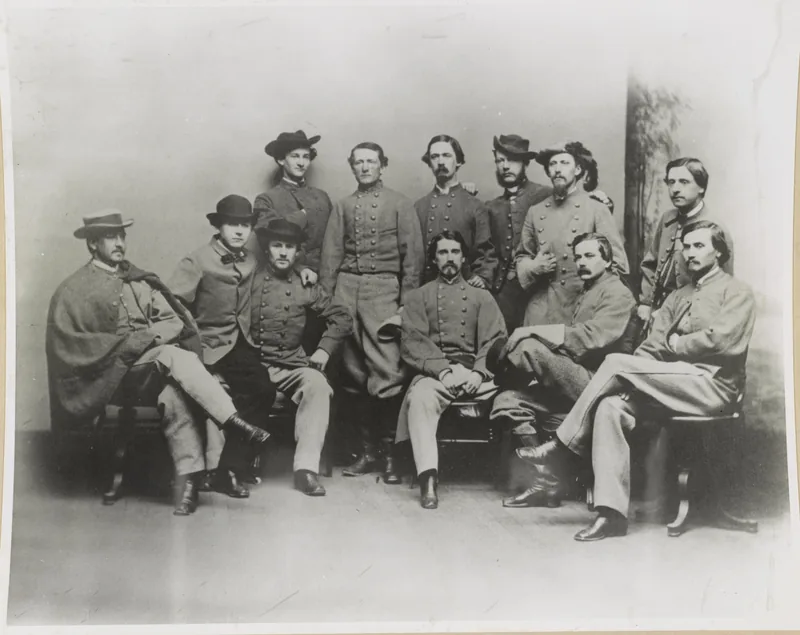
Studio group portrait of eleven men in grey double-breasted jackets and slouch hats, some seated with crossed legs, one wrapped in a cape, against a painted backdrop.
John S. Mosby and some of his Rangers, 43rd Battalion Virginia Cavalry. The Library of Congress dates the photograph to the war years. Library of Congress, LC-DIG-ppmsca-35436. No known restrictions on publication.

That puts you on the Confederate side of a war fought to preserve slavery. The game treats that seriously rather than romantically: it is about irregular war and what it cost, and it ends in surrender. Read about the history and how we handle it.

Plan it, then ride it

The campaign

A turn-based campaign across a hex map of Northern Virginia, 1863 to 1865. Plan raids, manage safehouses, gather intel, recruit men and rest your horses, while weather and season change how far you can ride. Three acts follow real operations, from the Fairfax Court House raid and the Greenback Raid to the fight with Blazer’s Scouts.

The raids

Then you ride each raid yourself, in real time and in first person, from the saddle. Mounted combat runs on momentum: your aim drifts as your speed rises, turns widen at a gallop, and a wedge of riders hits like a battering ram.
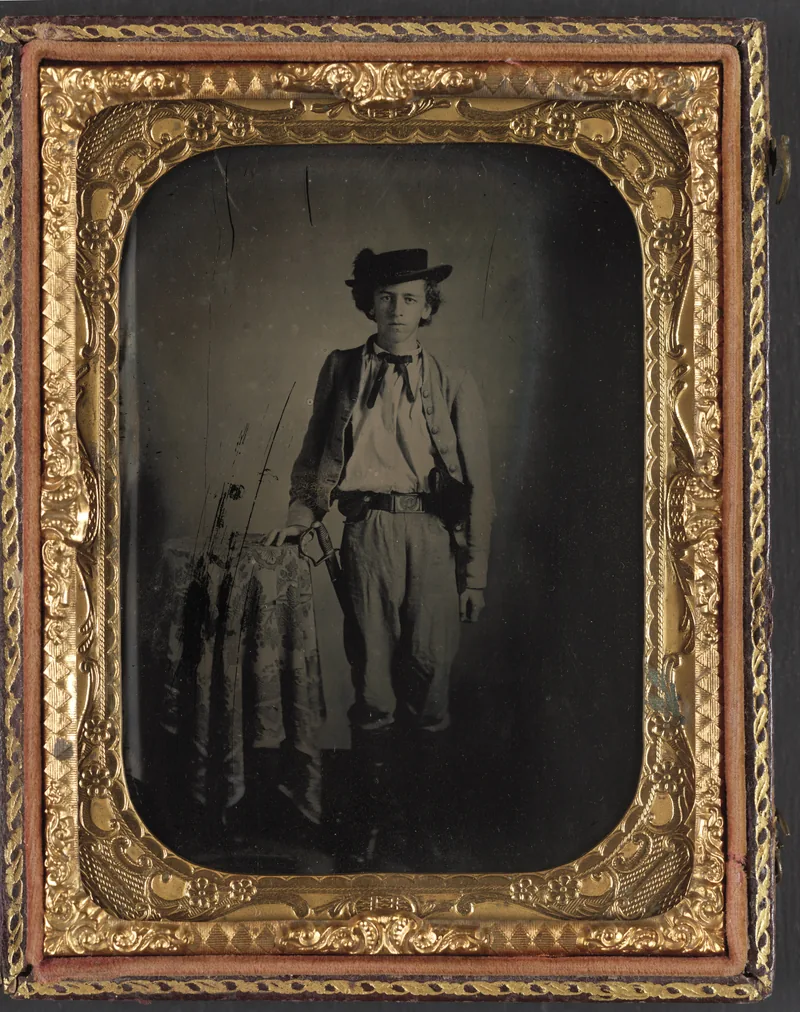
Ambrotype in an ornate gilt frame of a young man in a plumed hat and short jacket, one hand on a sabre hilt resting on a draped table, a revolver holster at his belt.
Private Lucien Love, Company D, 43rd Battalion Virginia Cavalry: one of Mosby’s Rangers. Ambrotype, about 1863–64. Library of Congress, Liljenquist Family Collection, LC-DIG-ppmsca-34351. No known restrictions on publication.
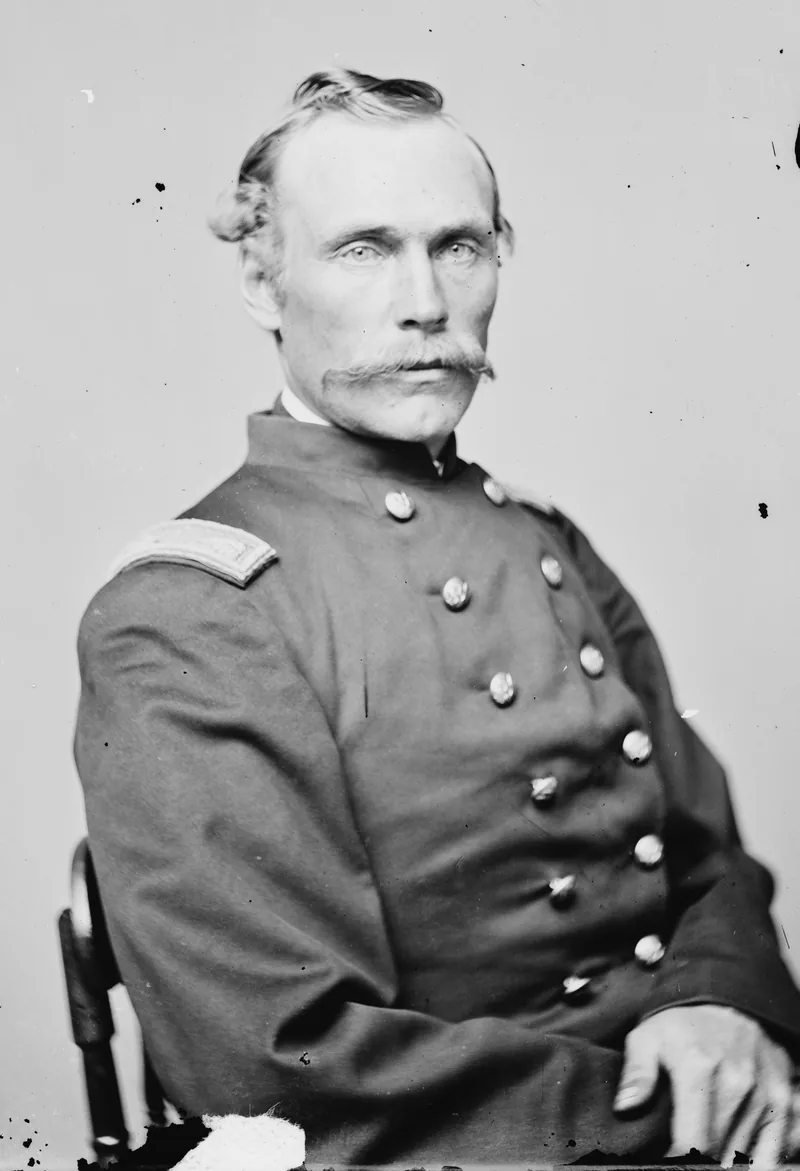
Seated half-length photograph of a Union officer with swept-back hair and a long moustache, in a double-breasted frock coat with shoulder straps.
Addison W. Preston of the 1st Vermont Cavalry, the regiment whose picket held Herndon Station. Brady studio negative. Brady studio. Library of Congress, LC-DIG-cwpb-05629. No known restrictions on publication.
  • The six-shooter economy

    No reloading in a fight. Fire one revolver dry, holster it, draw the next, and repack powder and caps by hand only once you have ridden clear. Fouling builds with every shot, and a neglected cylinder can chain-fire in your hand.

  • A horse you name, and can lose

    You name every horse. The bond grows over rides and campfires, and death is permanent. When a horse breaks a leg in a creek bed at night, you decide what happens to it, and the game remembers what you chose.

  • An enemy that learns

    The Federal response grows with your infamy: rear-echelon pickets who break at the yell, then veteran cavalry who hold formation and counter-charge, then Spencer repeaters that cancel your firepower, and finally Blazer’s Scouts, counter-guerrillas who fight like you and hunt your detachment across the map.

  • Intel and disguise

    Intel can be wrong. A scout’s report is reliable but costs you a veteran’s time, a sympathiser’s rumour is free but vague, and a prisoner might be lying. A stolen Federal overcoat can get you into a camp, and if you are caught wearing one, you are hanged as a spy.

  • Honour with consequences

    Every surrendered man is a choice. Parole prisoners and you keep safehouses and the hope of exchange if you are captured, but a paroled man can pick his gun back up. Execute them and you grow rich, and the enemy stops surrendering and fights to the death.
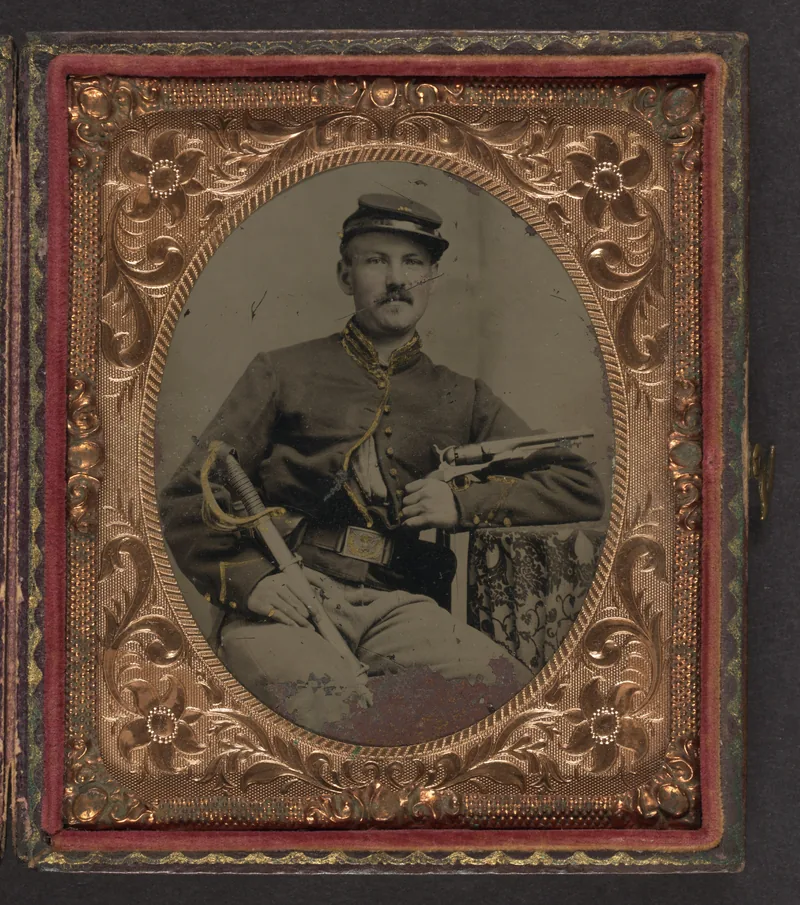
Cased oval portrait in an embossed brass mat: a moustached cavalryman in a forage cap and trimmed jacket, holding a revolver across his chest and a sabre on his knee.
An unidentified Union cavalryman with a Colt Army revolver and a cavalry sabre, 1861–65. The colouring is original to the photograph. Library of Congress, Liljenquist Family Collection, LCCN 2010648928. No known restrictions on publication.
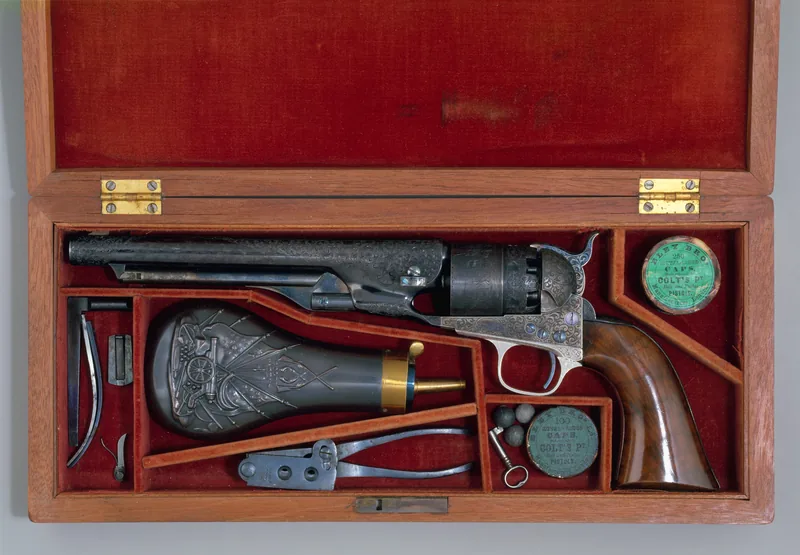
Wooden case lined in red velvet holding an engraved Colt revolver with a walnut grip, a powder flask, a bullet mould, round tins of caps and small tools.
A cased Colt Model 1860 Army revolver, made in Hartford in 1861: the gun at the heart of the six-shooter economy. This engraved example is finer than an issue revolver. The Metropolitan Museum of Art, 1983.442a–o. CC0.
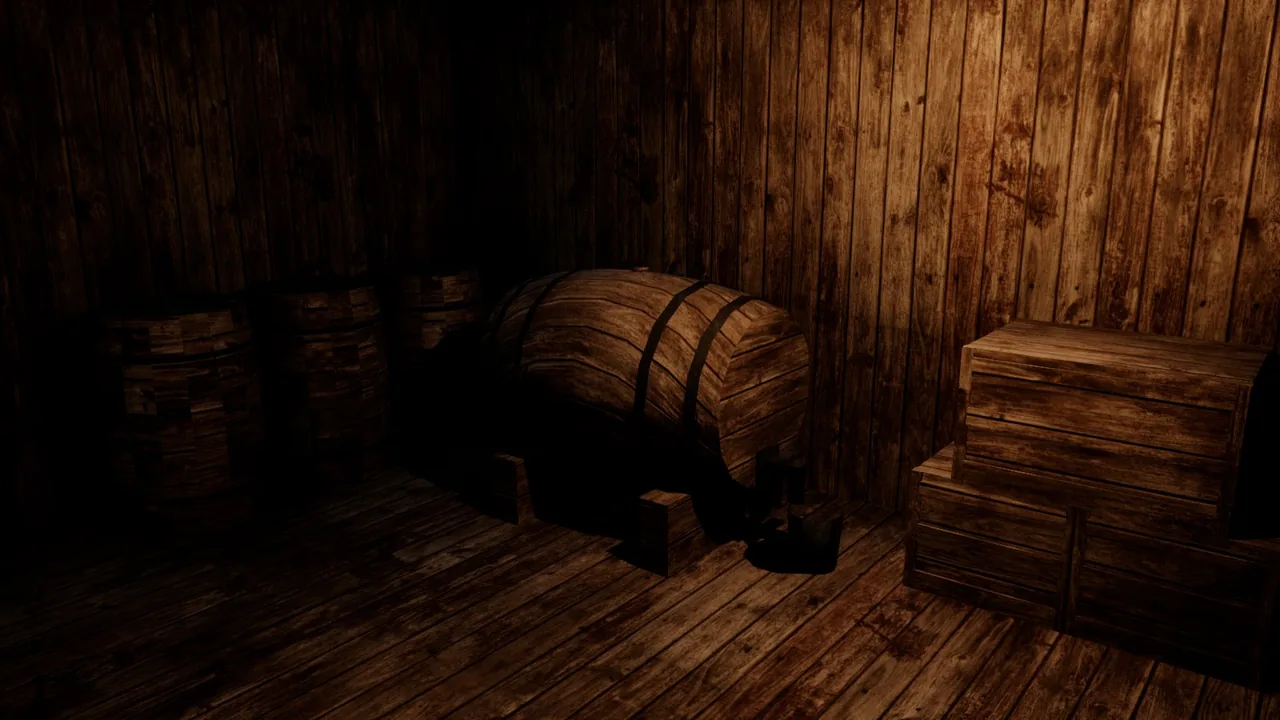
A dark storeroom with plank walls: a large barrel lies on its side on a wooden cradle, with smaller barrels behind it and stacked crates to the right.
The molasses hogshead in the freight room of Herndon’s depot, which served as a small store. Mosby wrote that the storekeeper was drawing molasses for a customer when the Rangers yelled, and ran, leaving it pouring out of the barrel. The room is generated by script from our research; where the sources are silent its layout is declared invention. In development: an in-engine frame.
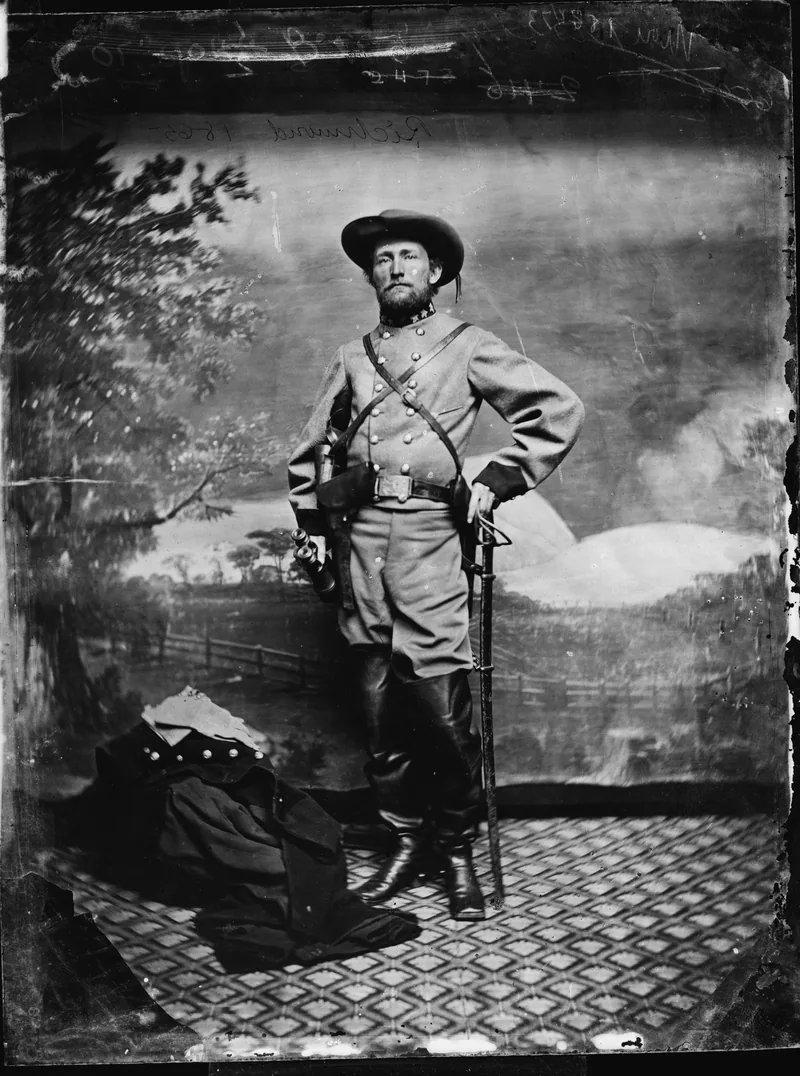
Full-length photograph of Mosby, bearded, in a plumed slouch hat and a grey shell jacket with cross-belts, one hand on his hip and the other on a sword, before a painted landscape backdrop.
John S. Mosby, photographed by the Brady studio. “Richmond 1865” is scratched on the glass negative. Brady studio. Library of Congress, Brady-Handy Collection, LC-DIG-cwpbh-03240. No known restrictions on publication.

No victory screen

Everyone knows how this war ends. In April 1865 Lee has surrendered, and Mosby disbands his battalion at Salem rather than surrender it. The last mission is a retreat and a parting, not a triumph. Your score is a roll call: which men made it to Salem, which horses carried them, and what your name means in the counties you rode through.

Status In development.

The first level, Herndon Station, will be free on Steam. Follow the journal for news.