
The studio
How we work
Irregular Formations is one person and a set of AI agents. Here is exactly who does what.
I would rather you hear this from me, specifically, than have to guess. Mosby’s Rangers is made by one person working with AI agents: language models set up to research, write code and run tools, each with a narrow job and a written brief. They do the heavy lifting. I do the deciding. This page says where the line falls.
What the agents do
Research across the archives
Agents search the places where the evidence lives: the Internet Archive’s books and official records, the Library of Congress’s digitised newspapers, the US National Archives, Smithsonian Open Access, Wikimedia Commons, and the Richmond Daily Dispatch of 1860 to 1865. They look for deeds, maps, memoirs, letters, regimental histories, official reports and newspaper columns that touch a place or a day we want to rebuild, and they record the rights of everything they find, so we know what we may show and what we may only cite. The tool they search with is open source: Heritage Research.
Transcription and cross-checking
They transcribe what they find and turn it into claims: one statement each, with the source and the exact passage, page or map crop it rests on. Where sources disagree, both versions are kept and the disagreement is written down: accounts of the Herndon raid differ on how many prisoners were taken, for instance, so the record says so. Then a separate critic agent samples the claims, reopens each cited passage and checks that the source really says what the claim says.
An evidence grade on every claim
Every claim carries one of four grades:
- Documented: a source of the period says so, or a participant’s own account, however late it was written.
- Surveyed: surviving buildings, a later map or modern survey data show it.
- Typical: it was usual for that place and time, but nothing says so for this exact spot.
- Invented: we made it up for the game, and we say so.
Inventions are declared, never hidden. Herndon Station is built from 223 claims drawn from 80 sources: 88 documented, 80 surveyed, 23 typical and 32 invented. Kitty Hanna, a real woman who lived there, says two lines in the game. Both are invented, and the record marks them as invented.
Writing and testing code
Agents write most of the game’s code, and every change has to prove itself. The rules of combat, horses and the campaign live in a core that runs without the engine, under thousands of tests. Every change is built and tested on our own build machine, and a bot plays the whole Herndon raid from start to finish: if the post doesn’t fall the way the sources say it did, the build fails.
Running the asset pipelines
Agents operate command-line pipelines that turn a written brief into a game asset. Depending on the asset, a pipeline:
- pulls an open-licence model or material, mostly from public-domain (CC0) libraries such as Poly Haven;
- restyles it to the house look in Blender: scale, topology, textures, wear and mud;
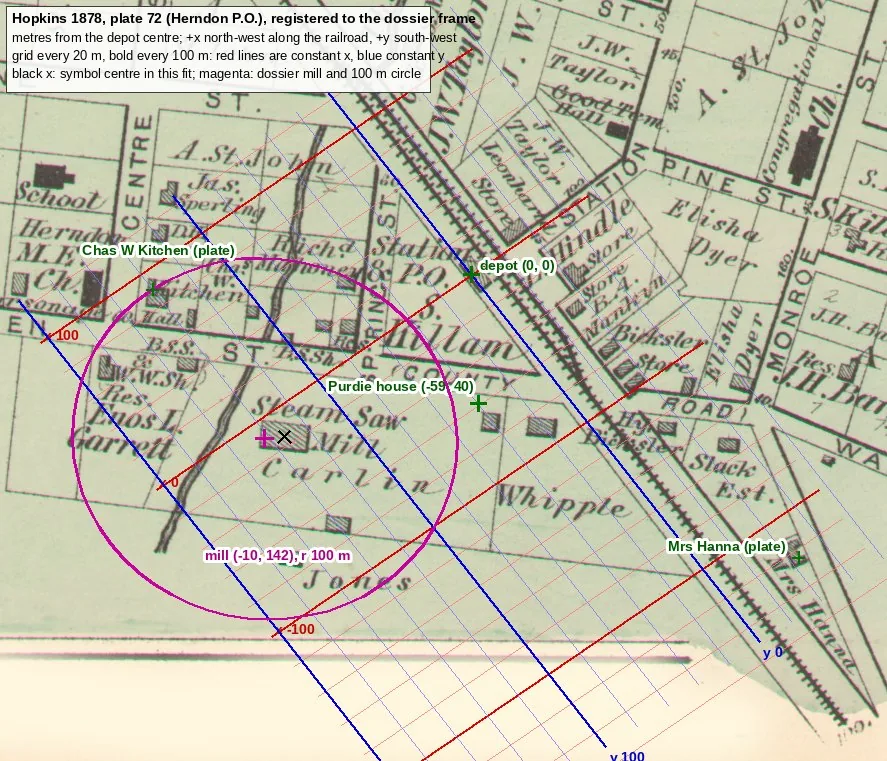
- builds it from a parametric recipe, as with the buildings of Herndon, whose plans and sizes come from the research;
- or, for forgiving props and as shape guides for faces, generates a shape with an openly licensed image-to-3D model.
Each step writes a report, and numeric checks reject an asset that is over budget, the wrong size or under a licence we can’t use.
Independent critics
The agent that builds something never grades it. Separate critic agents, which never see how the work was made, score it against a written rubric: one each for scenes, places, likenesses, hair, clothing, weapons, animation and individual assets. They are hard to please. Our first lantern went through eight reviews without passing, and Herndon’s frames are still scored “revise”.
What a person does
That person is me, and these parts are not delegated:
- The direction. What we make, why, and what it should feel like.
- Every decision. Agents propose and argue; I choose.
- The history. No claim is marked as reviewed for period accuracy until a person has signed it off. A historian and a sensitivity reader will review our public work on the history before it is announced.
- Likenesses. Every likeness of a real person needs my approval, and so far none has it.
- The story. What the game says about this war, and about the people in it.
- What ships. Nothing goes into the game or onto this site until I approve it.
What the pipelines make
Some of what you will see in Mosby’s Rangers is produced or restyled by automated pipelines rather than made by hand: buildings built by script from the research, props pulled from open libraries and restyled, generated trees and foliage, and people’s heads fitted to period photographs. Each asset records how it was made, from what, and under which licence, so when the game ships we can say exactly which of the things you see a model generated. The store page will say so, as Steam requires.
We will never present pipeline work as hand-made.
What we don’t do
- No AI-generated images, video, voice or music in anything we publish. Every image on this site is a real archive scan or a frame captured in our game engine.
- No generated or “restored” documents. A period map or newspaper here is the real scan, with its source.
- No invented history passed off as fact. If we made it up, the record says so.
If something here is wrong, or you would like to know more about how a particular piece was made, write to hello@irregularformations.com.